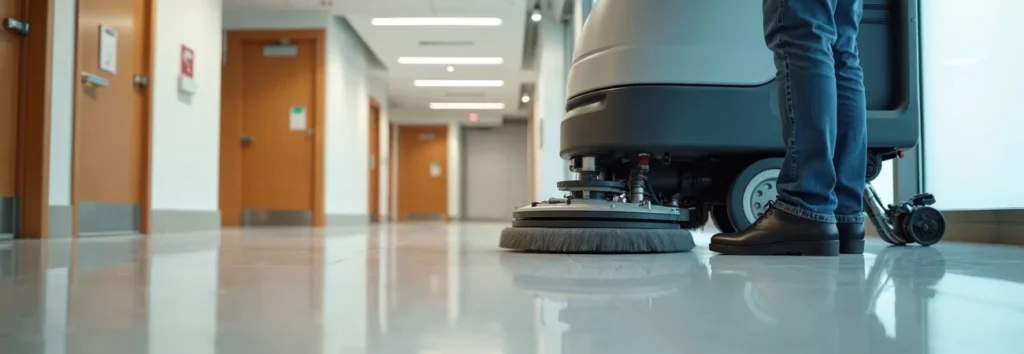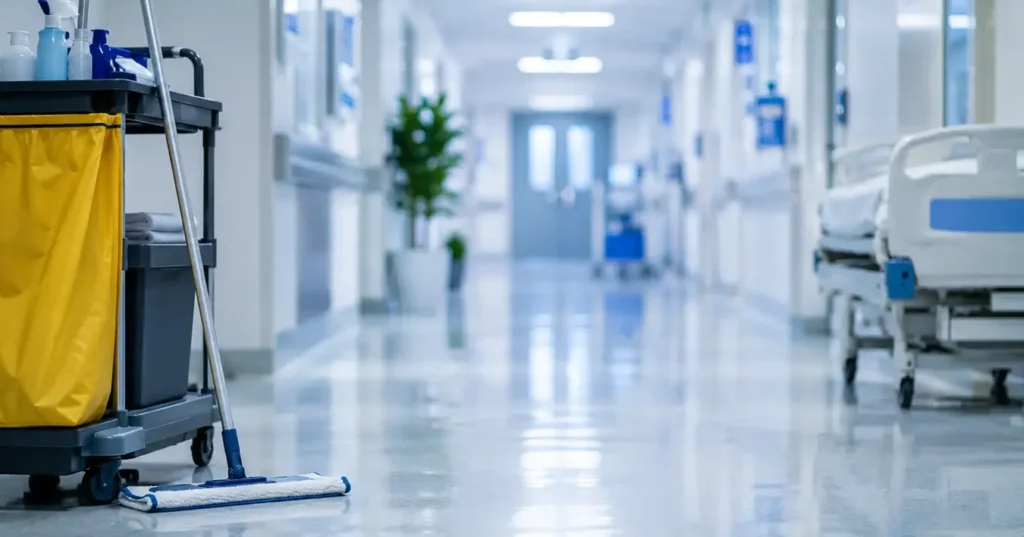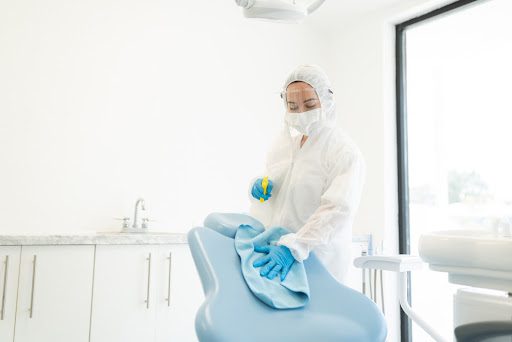
Hospital environmental services, or EVS, helps organize cleaning around patient care, room turnover, staff workflows, and infection-prevention procedures. This guide explains what hospital EVS includes, how responsibilities are divided, and what healthcare operations leaders should look for in an outsourced provider.
A Practical Guide to Hospital Environmental Services
Hospital cleaning gets complicated fast. It has to happen around patient care, between room turnovers, and without getting in the way of staff trying to do their jobs.
For healthcare operations leaders, hospital environmental services, or EVS, helps organize that day-to-day cleaning work so it fits the way the facility actually operates.
When EVS is well managed, responsibilities are clearer, service is easier to verify, and cleaning is less likely to become another issue that operations has to chase down.
What Is EVS in a Hospital?
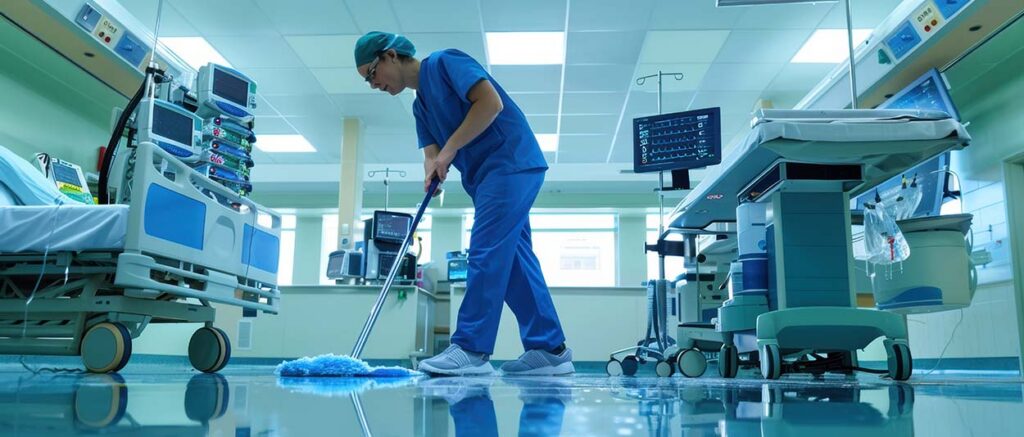
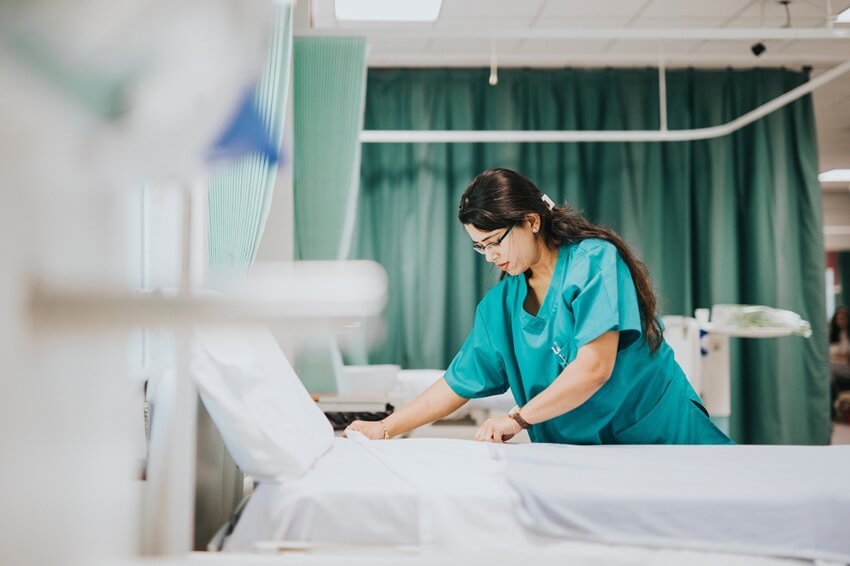
Hospital environmental services, or EVS, covers the cleaning, disinfection, and environmental upkeep of patient-care and shared spaces throughout a hospital.
In healthcare, environmental services have to work within hospital procedures and around clinical activity, room turnover, infection-prevention requirements, and spaces that may stay in use throughout the day.
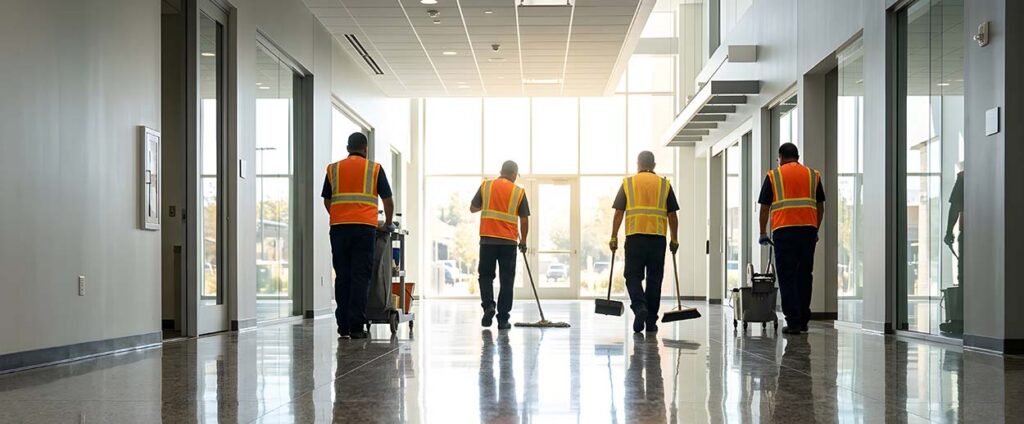
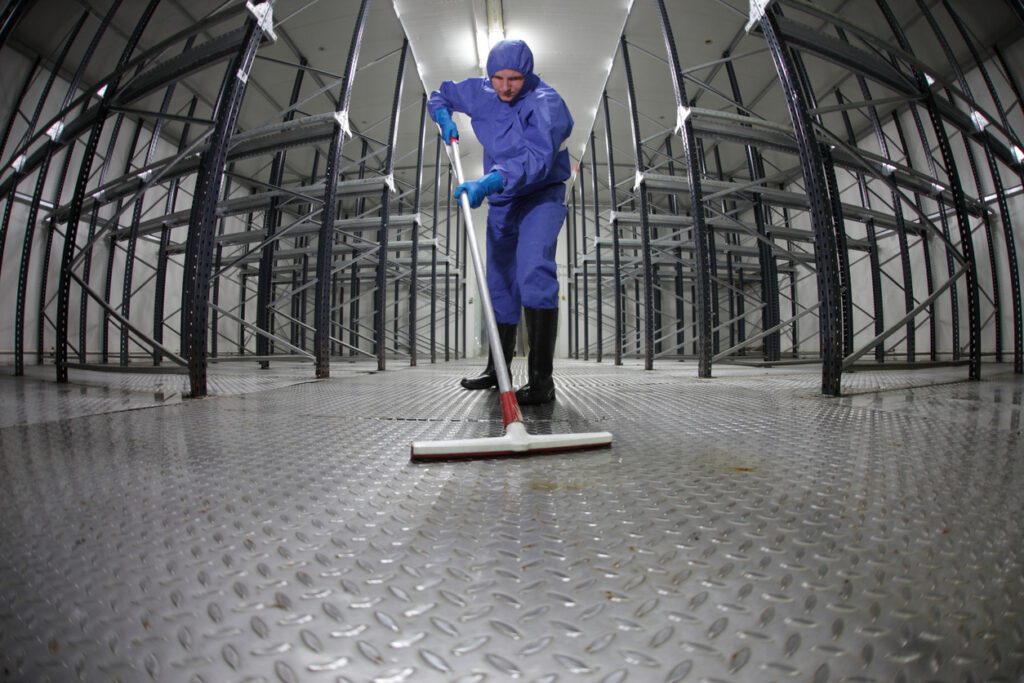
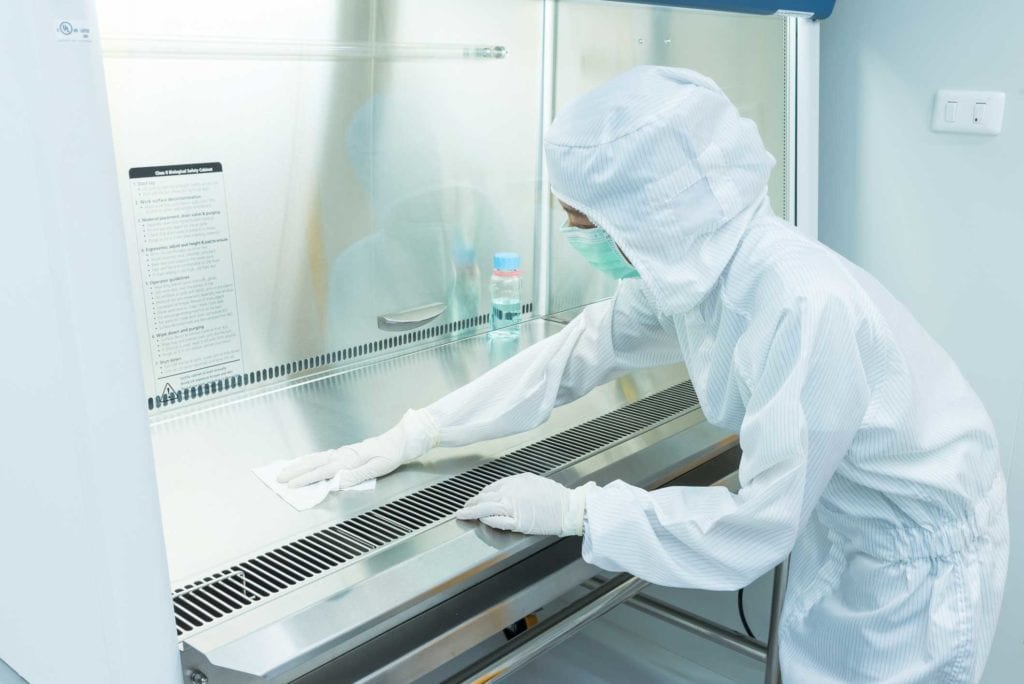
Similar coordination matters in other controlled environments, including research laboratories, where cleaning procedures also need to fit how the space is used. JaniTek supports a range of facility types and industries with cleaning programs built around how each environment operates.
What EVS Responsibilities Should Be Clearly Defined?
The exact EVS scope varies by hospital, but it often includes:
- Patient rooms and bathrooms
- Waiting rooms, hallways, nursing stations, and common areas
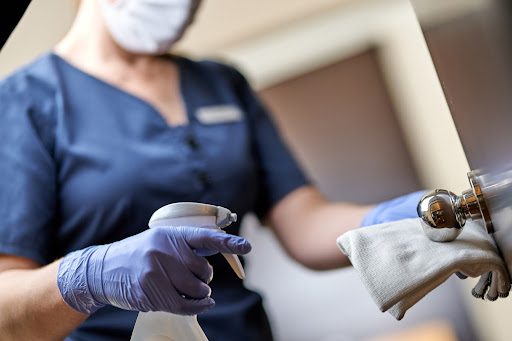
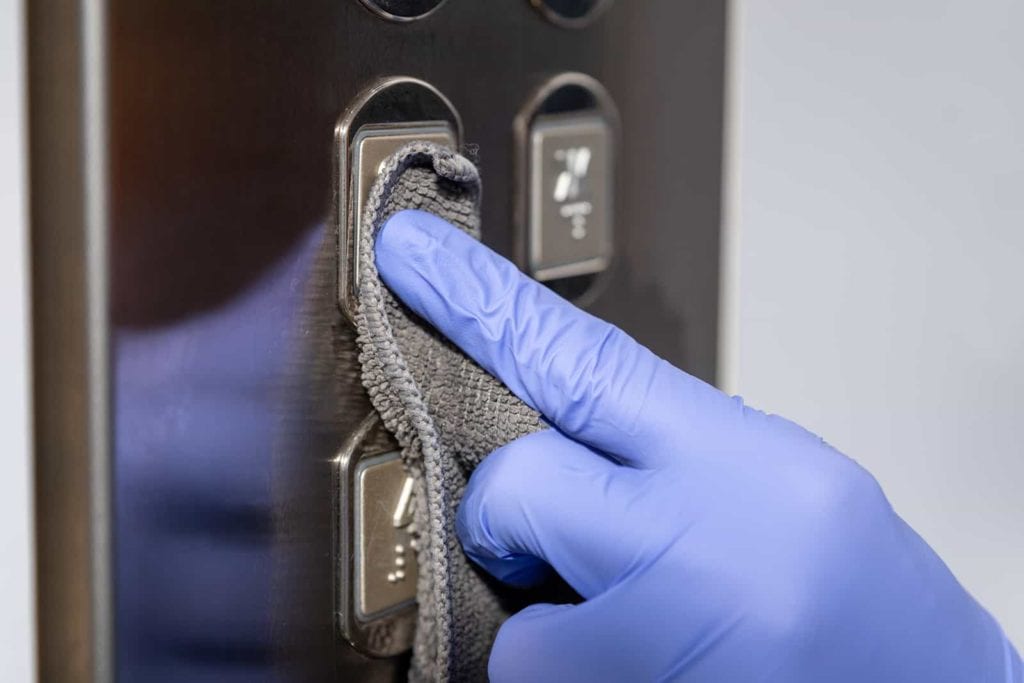
- Frequently touched surfaces
- Floors and other routine surfaces
- Room cleaning after discharge or transfer
- Spills, waste, and restocking when included in the scope
Some tasks are less clear-cut. Patient-care equipment, certain waste, and turnover responsibilities may belong to EVS, clinical staff, or both.
Who Handles What?
| Question to Ask | What to Clarify |
| Who cleans patient rooms? | Define what EVS handles during routine cleaning, turnover, and discharge cleaning. |
| Who cleans patient-care equipment? | Clarify which items belong to clinical staff and which, if any, are included in the EVS scope. |
| Who checks restrooms and common areas during the day? | Confirm whether service follows a set schedule or adjusts based on traffic and use. |
| Who responds to spills? | Make sure responsibilities are clear and match the type of spill. |
| Who handles waste? | Define which waste streams EVS handles and which require another process or team. |
| Who restocks supplies? | Clarify which supplies EVS manages and who monitors inventory. |
How Does An EVS Hospital Program Work?
Hospital EVS rarely happens on one fixed schedule. Cleaning may be needed during patient room turnover, when a restroom needs another check during a busy afternoon, or when a spill requires an immediate response.
The cleaning plan should account for how spaces are actually used, including patient volume, operating hours, and areas that stay occupied throughout the day.
Why Does EVS Matter to Healthcare Operations?
EVS affects more than how a hospital looks. It can influence patient confidence, staff workflow, infection-prevention efforts, and how easily operations can verify that cleaning procedures are being followed.
Patient Experience
Patients notice when restrooms, waiting areas, or rooms do not look clean and ready. That can affect confidence in the facility.
Staff Workflow and Confidence
Clear EVS responsibilities help staff know who handles what and keep cleaning issues from slowing down the day.
Infection Prevention and Inspection Readiness
Environmental cleaning in healthcare is one part of a larger infection-prevention program. EVS supports those efforts by following established cleaning and disinfection procedures. Documented procedures and regular quality checks also make it easier for operations to verify the work and stay prepared for inspections.
What Should You Look for in an Outsourced Hospital EVS Partner?
When comparing hospital cleaning services, the biggest question is not just whether a provider can clean the building. It is whether the team can fit into the way your hospital operates.
- How will you define what your team is responsible for?
A documented scope should name the areas, tasks, frequencies, and any responsibilities that stay with clinical staff. - How do you determine cleaning frequency for different areas?
Frequency should reflect how the space is used, patient traffic, surface contact, operating hours, and facility procedures rather than one schedule for every area. - What training does your team receive before working in our facility?
Training should cover facility procedures, approved products, contact times, PPE, spill response, waste handling where applicable, and site-specific expectations. - How do you coordinate around patients, room turnover, and clinical staff?
The process should make clear when EVS can enter a space, how turnover is communicated, and what happens when schedules change. - How is the work checked, and how are missed tasks corrected?
A strong process may include supervisor inspections, service verification, issue tracking, corrective action, and follow-up when the same problem keeps happening. - How do you maintain consistency when staffing, patient volume, or operating hours change?
Documented procedures, trained backup staff, clear escalation steps, and a plan for adjusting service can help keep standards consistent when conditions change.
For California healthcare organizations, outsourced EVS can also raise labor and contractor compliance questions. JaniTek’s Risk Mitigation Resource Hub covers those issues in more detail, including:
- SB 525 Healthcare Minimum Wage for healthcare facilities evaluating wage requirements that may apply to janitorial and housekeeping workers.
- Property Service Workers Protection Act for contractor registration, training, and recordkeeping requirements.
- Displaced Janitor Opportunity Act for organizations changing janitorial providers and managing contractor transitions.
Hospital EVS FAQs
How often should hospital EVS clean patient rooms and common areas?
There is no single schedule that works for every space. Frequency should reflect how the area is used, patient traffic, how often surfaces are touched, and the facility’s own cleaning and infection-prevention procedures.
What training should hospital EVS staff receive?
Training should cover the facility’s cleaning procedures, approved products, contact times, PPE, spill response, waste handling where applicable, and any site-specific responsibilities. Ask how training is documented and how competency is checked.
What is terminal cleaning in a hospital?
Terminal cleaning is a more thorough cleaning and disinfection process typically performed after a patient leaves a room or when required by facility procedures. The exact scope should be defined by the hospital.
Who is responsible for setting hospital EVS cleaning procedures?
EVS should work from procedures established by the facility, often with input from infection prevention, operations, clinical leadership, and other appropriate teams.
How do you measure hospital EVS performance?
Look beyond whether complaints are low. Supervisor inspections, service verification, issue tracking, corrective actions, and regular reviews can give operations a clearer picture of whether the agreed-upon work is actually being completed.
Is Your EVS Hospital Program Working the Way It Should?
A good EVS program should make cleaning easier to manage, with clear responsibilities, reliable service, and a process for checking that the work is getting done.
JaniTek works with healthcare facilities to build cleaning programs around patient flow, operating hours, room turnover, and facility procedures.
Learn more about JaniTek’s healthcare cleaning services or request a free consultation.